
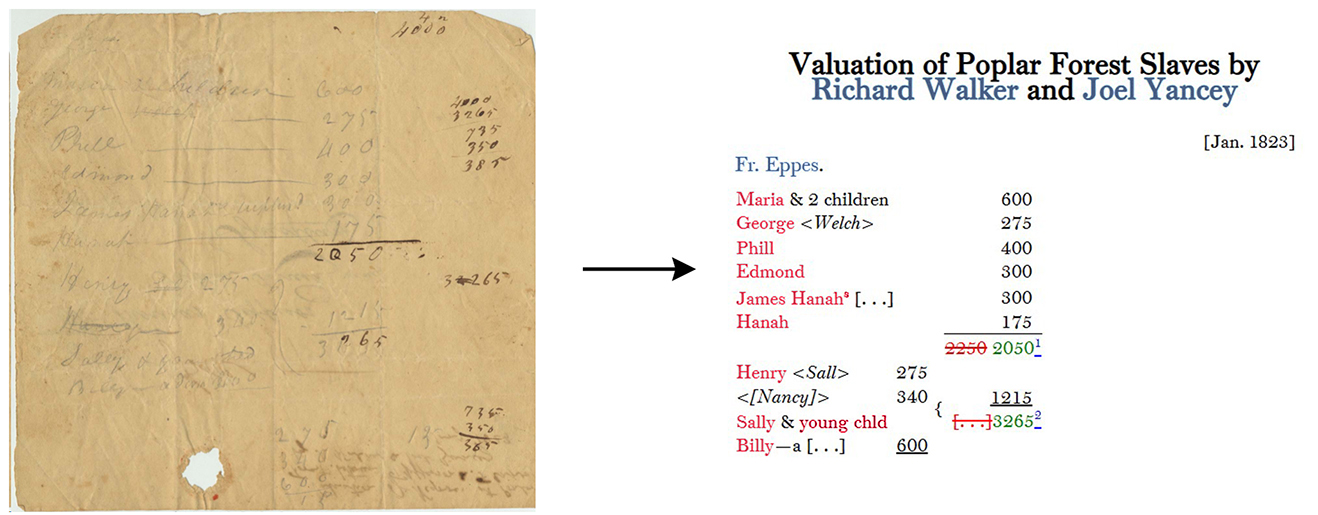
ApproachDASFAM is a collaboration between multiple departments at the Thomas Jefferson Foundation, combining the meticulous process of document review, annotation, and data tagging of The Papers of Thomas Jefferson: Retirement Series (PTJRS) with the extensive oral histories, genealogical research, and cultural perspectives of Getting Word historians. It builds upon the 2007 plantation database using Jefferson’s Farm Book, which provided a starting point by documenting the names, birth and death dates, family connections, locations, and occupations of hundreds of people enslaved at Monticello. While these materials have been transcribed and assessed by the PTJRS, majority have not been reviewed with the goal of recovering references to African American life. By re-assessing these materials to construct an ever-growing database that tracks each reference, we gain a far deeper understanding of individuals and families. | |
 | |
End ProductThe digital archive will serve as a resource for researchers, descendants, and enthusiasts to follow people throughout their life from slavery to freedom. Users will have access to a comparatively detailed record of the lives of enslaved people who lived at Monticello and other Jefferson properties. This project's database format will emphasize observations of individual person activity throughout a wide scope of documents and the ability to organize records to user-specific searches to analyze larger patterns. | |
Key Segments | |
|
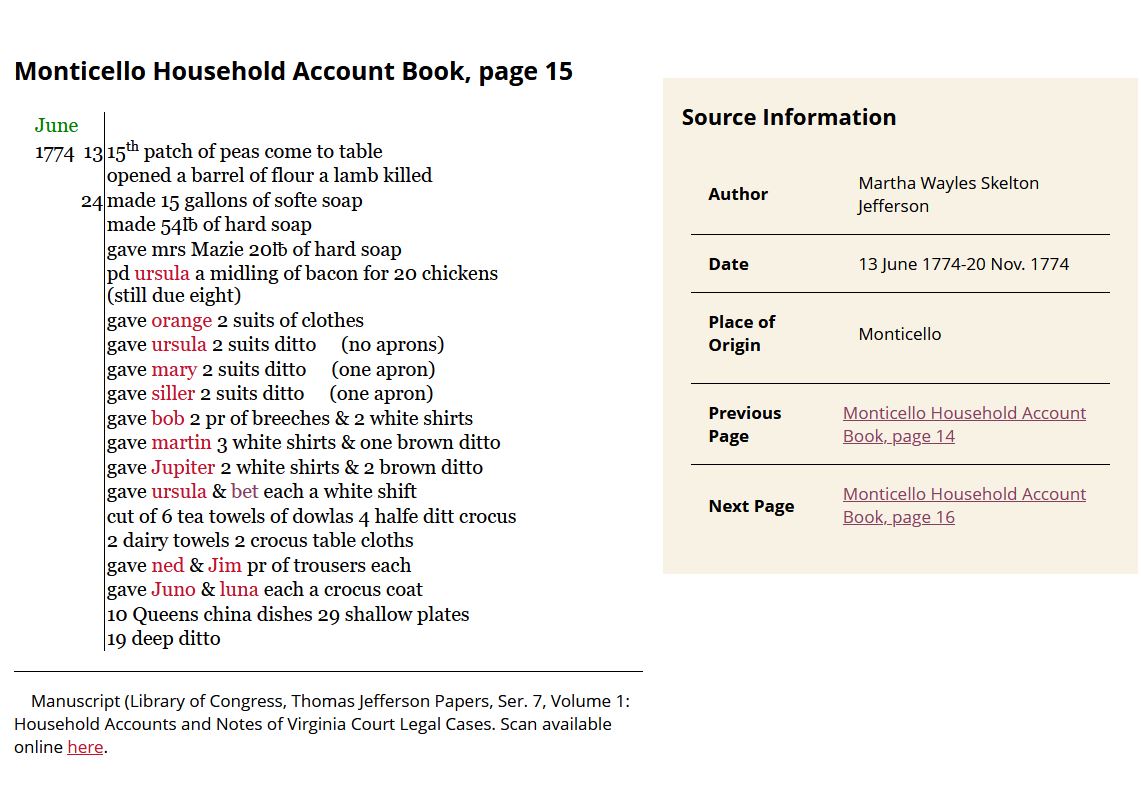
Source documents are transcribed manuscripts in our collection, which will eventually pull from a wide scope of available records. The transcriptions aim to be as close to the original source material as possible, maintaining unique spellings and grammar of the author and noting significant alterations the author made. |
 |
|
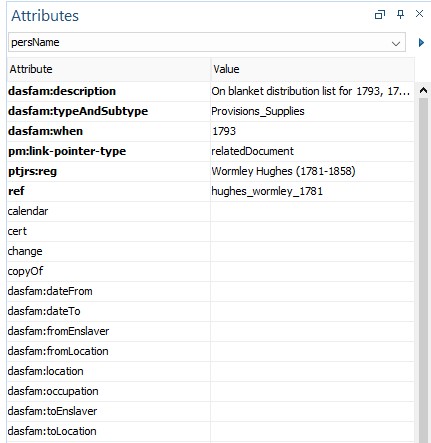
Every time a person is mentioned in a document, editors create a person tag that stores the information of the event occuring. This may include the event date, location, Event Type, a brief description of the event, enslaver and/or location transitions, and the person's occupation at that time. Clicking on a person tag will redirect you to their person record. |
 |
All person tags link to Person Records, biographical accounts of individuals referenced in our source document collection. As new materials or research are added to DASFAM, the person records are updated to reflect new information. These records contain the following sections:
|
|
Contact UsHave comments, feedback, or questions about DASFAM? Please use the Contact form located at the bottom of the Getting Word Home page. | |
© 2025 Thomas Jefferson Foundation, Getting Word: African American History at Monticello supported by The Mellon Foundation